
Victor Adewale: Photographing the Communities That Raised Him
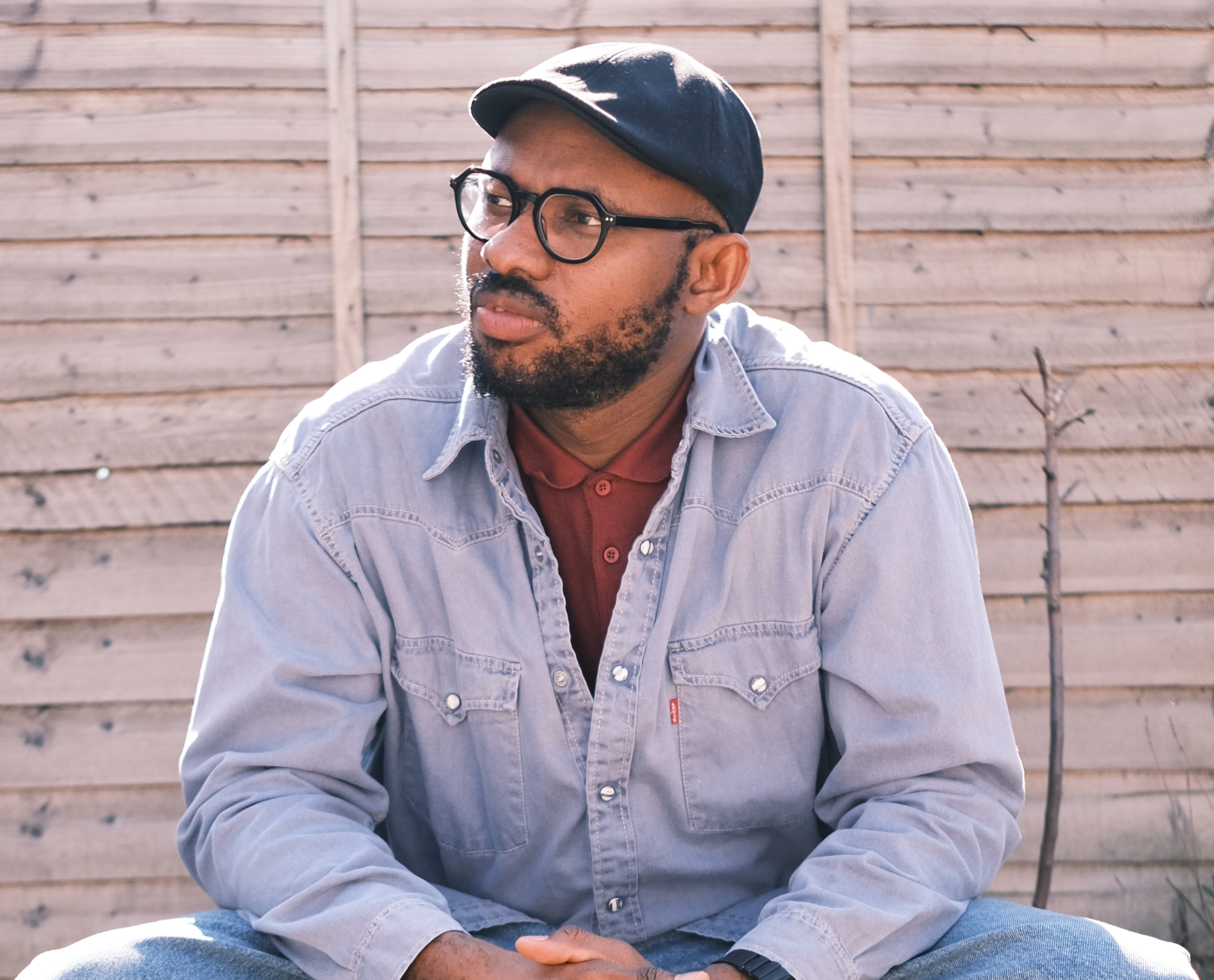
There is a building in Mushin, Lagos, where Victor Adewale was born. Thirty years later, he returned with a camera.
Faith Home is not what official records would call a hospital. It is a modest maternal healthcare centre run by the church his parents attended, sustained by prayer and communal solidarity, staffed by women from the congregation who volunteer their time despite having little to no medical training. It is the kind of place that keeps poor communities alive while remaining invisible to the people in power, the ones who have never needed it. It is also, for Adewale, the starting point of his own existence.
But before we get to that, it helps to understand what connects the different bodies of work he has built. Because the thread running through all of it is the same one.
"Community," he says, without hesitating. "I care a lot about community. And another theme you'll find in my work is the idea of informality. Not in the way it is defined by the state, or by the political elites. Informality in terms of the people who keep the economy running, but are under-recognised or under-appreciated, because maybe their work is not seen as tangible, or because they don't cater to a certain demography of people who don't need their service anyway."

Ebi Olokada, his widely celebrated project on Lagos motorcycle riders, sits squarely in that tradition. The okada riders who weave through the city's gridlocked streets are indispensable to millions of daily commuters, yet they occupy a precarious social standing, tolerated when useful, threatened with bans when politically convenient. The project has attracted significant international attention, earning Adewale multiple award nominations and a win at the Bamako Biennale, alongside recognition from National Geographic.
For Adewale, though, the acclaim was never the point. "When I'm considering a project, these are not considerations that are active on my mind," he says. "I primarily work on projects that I care about. If I care about a project, I could work on it for ten years and not get tired. It's a natural order of the world. If you give time to something, it will produce value."
Ebi Olokada gave visibility to men whose contribution to city life is undeniable but rarely celebrated on its own terms. That instinct to honour the unacknowledged, to photograph what the powerful would rather not see, is what led him, eventually, back to Faith Home.
"Faith Home came about when I was basically inquiring into how I was born," he explains. "Through all the stories that my mom had told me from when I was little, I was actually born in a church, in an informal hospital, slash maternal healthcare centre. It's called Faith Home. Literally because it's a place run by the church, and powered by faith. Prayers."
His mother spent over six hours in labour there. Mushin, where the centre sits, is one of Lagos's most densely populated and underserved neighbourhoods, and for families unable to afford formal medical services, Faith Home became a lifeline. Every Thursday, women from the church gather first for prayer at the building adjacent to Faith Home, then convene to offer informal care to one another. A doctor visits once a week, primarily for emergencies. The rest of the time, faith and solidarity fill the space where the healthcare system falls short.

"The state of pregnancy can be very lonely for a lot of women," Adewale says. "But being in community with other people going through that experience has played a huge role."
During the period he documented, every woman gave birth safely. At least two of the babies' naming ceremonies, he attended himself.
The project sits at the intersection of the deeply personal and the urgently political. Faith Home operates outside formal regulatory frameworks, and Adewale is acutely aware of how images of such spaces can be weaponised. "Governments use instruments of legality and illegality to invisibilise and to erase informal contributions like this," he says. "Who defines what is legal and what's not? Whose priorities are being centred when we say something is legal or illegal? Why do we demonise those people who fill in the gap, rather than address the evil of the gap being created?"
Gaining access was not straightforward. He approached it through his mother, who still holds his birth card from when she registered there while pregnant with him. She accompanied him in the early visits to establish trust, and after about a week, he was on his own, navigating carefully, conscious at every point that he was a man in women's space.
"It was hard to capture some things, because it would almost be like invading their space and the safety that they've created," he says. "If you check the portfolio, you won't find an actual photo of any woman giving birth, because I was not allowed into the space to capture an active birth procedure. And I didn't push. I respected it. Storytelling is important, but not at the expense of the people who own this story."

The women who allowed him to photograph them set their own terms: he would not publish any images until they had all delivered safely. He agreed, not in writing, but by trust, the same currency the whole place runs on.
"They entrusted me with their images. If I were a stranger, there's no way for them to verify that I would do that. My being part of this community was an asset."
That phrase, community as asset, captures something Adewale returns to across most of his projects. "It almost feels magical when someone who is part of a story is telling it," he says. "Nobody has to teach you consent if they're always going to be in your life. You're more careful, because you see yourself in them."
Going back to photograph in the neighbourhood where he grew up activates something he finds difficult to put into plain language. "It feels like being young again. I might have grown up in age, but I'm still the same boy. The community already knows me, and this is me trying to know it consciously. Growing up, I was a child, I can't say that I know the community. This is like a search to know this place that has always known me."
As March had us celebrating Mother's Day, Faith Home is the most fitting project to sit with as the month concludes. It is a story about what mothers do in the absence of what they deserve, and about the spaces, physical and spiritual, where the work of bringing life into the world gets done. It is an homage to women who have turned faith and communal organising into a form of mutual aid, standing in for a healthcare system that too often fails to protect mothers and infants. And it is a story about one man tracing himself back to his beginning and finding, in the same building, a community doing exactly what his own mother once relied upon.
When asked what he would say to the women he photographed, Adewale does not reach for inspiration. "I would rather listen to what they have to say to me," he says. "All I can say to them is gratitude for giving me a chance to connect to my own self through their own story."
Victor Adewale is a multidisciplinary artist and photographer based in Lagos, Nigeria. He is a National Geographic explorer and Prince Claus Seed Awardee. You can view his work on his website and follow him on social media.


Comments