
Lagos Meets London: Adisa's Peckham Project
Updated: Jul 6

There is a saying among many Nigerians that if you have a relative who left Nigeria for Britain many years ago and never came back, you should go to Peckham. Walk slowly down Rye Lane on a Saturday morning, step into a fabric store or a hair salon, linger near a church on a Sunday afternoon, and chances are, you might find them there.
On most weekends during the summer of 2025, you will find Adisa in Peckham- a part of London so thoroughly Nigerian it is jokingly referred to as the country’s 37th state. He spends entire days there, often returning to the same hairdressing shop on the same street, sitting with the same auntie from one in the afternoon until six in the evening, watching as the day moves around him and lifting his camera and approaching a scene when something catches his attention.
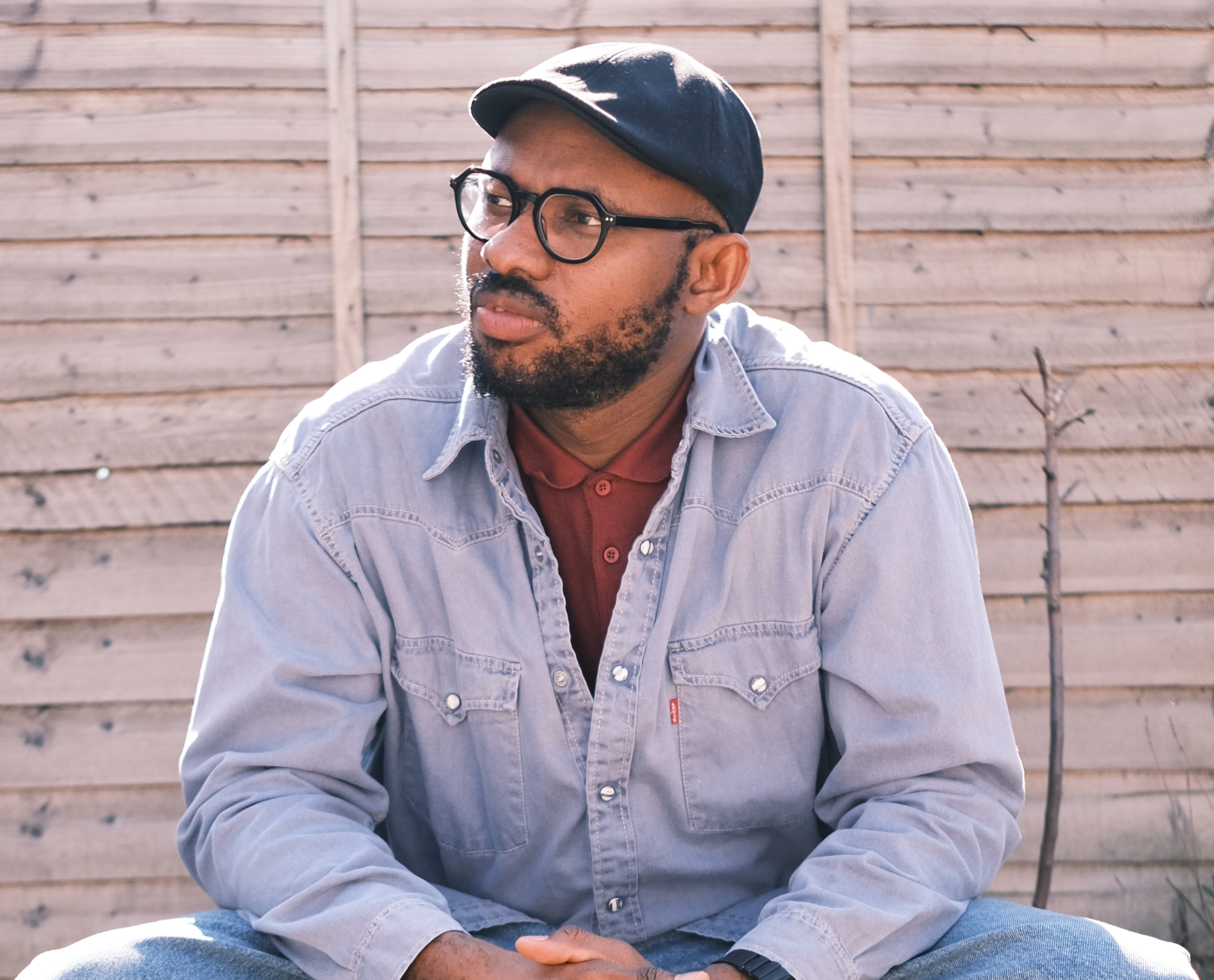
Adisa Olashile is a fine arts photographer originally from Nigeria, now based in East London. His ongoing series Lagos meets London documents the Nigerian community in Peckham, one of London's most vibrant and culturally layered diasporic neighbourhoods, capturing the textures of a community that has determinedly built a version of home thousands of miles from where it began. In Adisa’s words, he considers the series a personal bridge between two places he calls home: Lagos and London.
Peckham, a district in southeast London, has been home to a large Nigerian community since the civil war of the late 1960s began pushing waves of Nigerians toward the United Kingdom, a country bound to Nigeria by the long, complicated thread of colonialism. Peckham emerged as a haven for these early migrants, offering affordable housing and a welcoming atmosphere, and as Nigerians put down roots, they established businesses and became active participants in the local property market.

The neighbourhood earned the name Little Lagos as an organic recognition of what it had become over decades of settlement, a place where the distance between two cities collapsed into something you could almost touch. On Sundays, Nigerian church groups fill community centres and halls. Rye Lane carries the smells and sounds of a community that has built an entire world within a world: Halal butchers, Nigerian fashion houses, and Nollywood playing barbers sit alongside each other on the same strip.
Adisa’s documentation of Peckham began almost accidentally. After moving to the UK, Adisa found himself struggling to locate his footing photographically. Portsmouth, where he initially settled, offered little of the visual richness and human density he was drawn to, and for a period, his work stalled. It was not until 2024, when he found himself in Peckham for the first time, that something shifted.
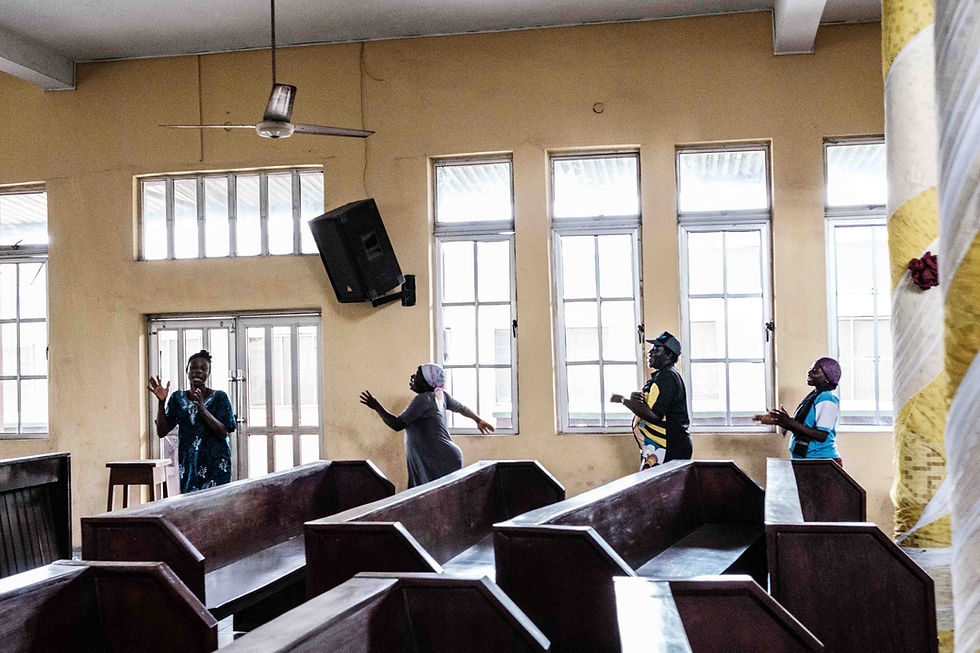
The neighbourhood, with its Nigerian restaurants and churches and market stalls and the particular cadence of its streets on a Sunday morning, felt immediately familiar. He began visiting regularly, then obsessively, photographing church congregations, street scenes, cultural celebrations, and the ordinary, mundane expression of Nigerian life being lived in a city not built for it. He posted some of the work online, it gained traction, and he has been returning ever since.
Adisa has no formal training in photography; he considers himself self-taught. His practice is built entirely on instinct, on a sensitivity that cannot be easily taught in a classroom. He is drawn to the mundane and the familiar, to scenes so ordinary they have become invisible to most people, and it is precisely in that ordinariness that he finds something that connects to many people.
The scenes he photographs are relatable enough to be anyone's memory, which is why viewers do not simply look at his work but find themselves inside it, projecting their own histories onto his photographs.
Lagos meets London is presented in a vintage aesthetic, similar to colonial-era colour grading and that he said emerged almost unintentionally. A tonal quality that seemed to compress time and geography in a way that resonated with viewers. It is as though Peckham and Lagos are not two separate places at all but a single, continuous world that happens to be split across an ocean.
When Adisa shares work online, especially on X (formerly Twitter), he pays attention not to what people think of the photography itself but to what the photography makes people remember and feel and say. The comments sections become unexpected spaces of collective memory, where viewers share their own stories about church Sundays and family gatherings and aunties who plait their hair and neighbourhoods that once felt exactly like home.

This is what he is ultimately building towards: not just a photographic series but an archive that belongs as much to its contributors and viewers as to him, a repository of a community's life that the community itself can return to and find itself within.
He hopes one day to mount a solo exhibition. In this properly curated, gallery-scale event, the full accumulation and weight of the series can be experienced together rather than in fragments.
It is an ambition proportional to the seriousness of the work, which deserves to be seen at scale, in a space where a viewer can move through it slowly and feel the full measure of what Adisa has been quietly assembling in Peckham, one weekend at a time.
Adisa Olashile is a London-based photographer originally from Nigeria. His work spans portraiture and fine art photography, exploring identity, resilience and everyday moments. You can check out his work on his website and follow him on social media


Comments